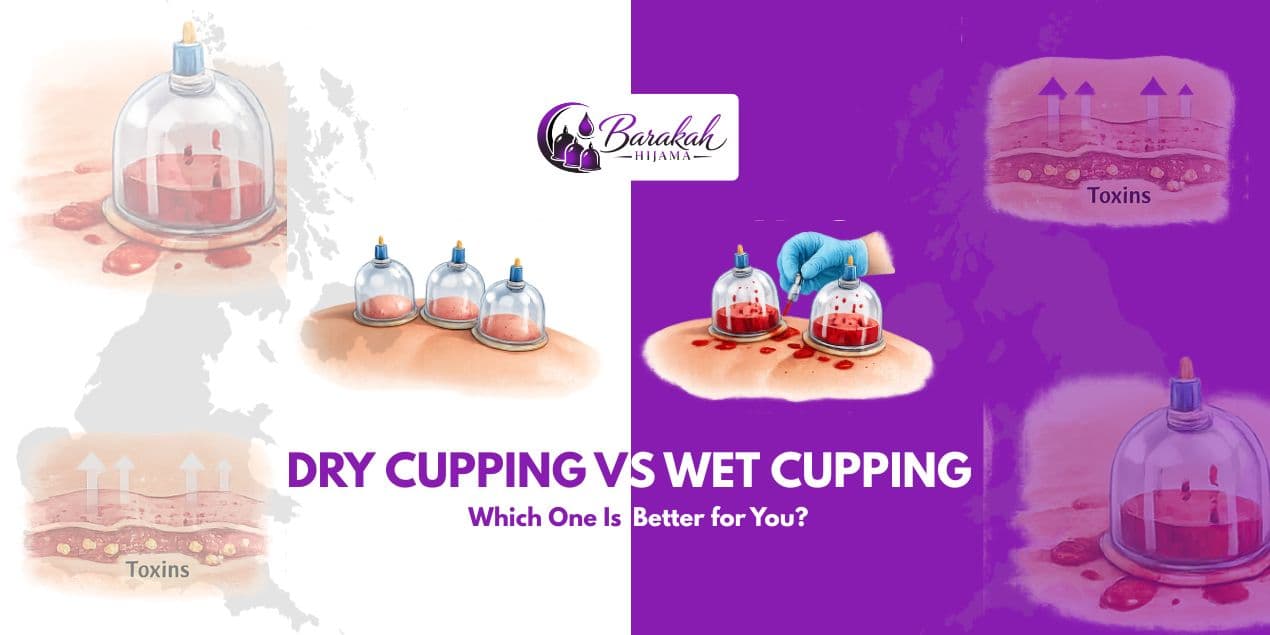
People in Sheffield, UK, have started to favor cupping therapy more and more as a natural and holistic way of healing. A common question when looking for "cupping therapy near me" or "hijama near me" is: "What is the difference between dry cupping and wet cupping, and which one is better?"
At Barakah Hijama, we think the best option varies according to one's health demands, objectives, and comprehension of the operation of each therapy. This guide will clarify for you the characteristics of dry cupping and wet cupping, differences, advantages, and how to choose the suitable treatment for your case.
What Is Cupping Therapy?
Cupping therapy is a technique where suction cups are applied to the skin and are responsible for increasing blood flow, eliminating muscle stiffness, and helping the body to heal itself naturally. The suction creates a gentle pull on the skin and the tissues beneath it, which helps in relaxing and increasing blood flow.
There are various types of cupping, but among all, the following two are the most widely used and known:
- Dry cupping
- Wet cupping (Hijama)
These are both very good, but being a little different, they cover different interaction areas.
What Is Dry Cupping?
Dry cupping is a type of cupping therapy that is completely non-invasive and relies solely on suction. No cutting or bleeding occurs. The method is often applied for muscle relaxation, pain relief, and stress reduction purposes.
How dry cupping works:
Cups are positioned on specific parts of the body, producing a suction that enhances blood circulation in that region. Consequently, this leads to relaxation of the contracted muscles and
thus improved movement.
Common uses of dry cupping:
- Muscle stiffness and tension
- Pain in the back, neck, and shoulders
- Sports recovery
- Stress and tiredness
Dry cupping is often the choice of people who are either beginners in cupping therapy or those who want a milder treatment.
What Is Wet Cupping (Hijama)?
Wet cupping, also referred to as Hijama, is a more sophisticated form of cupping therapy. After the initial suction, small superficial cuts are made on the skin, and then suction is done a second time to extract the stagnant or unhealthy blood.
Hijama cupping is a therapy that is strongly associated with Islam and considered a modern-day Sunnah practice.
The process of wet cupping:
- The first suction pulls the blood to the surface
- Tiny cuts are made
- The second suction gets rid of the stagnant blood
This technique helps in detoxifying the body and maintaining the body's equilibrium.
Key Differences Between Dry and Wet Cupping
Knowing the distinctions between the two methods right away answers the question, “cupping – what does it do differently in each method?”
Dry cupping:
- No blood removal
- Concentration of the circulation and relaxation of the muscles
- Non-invasive and soft
Wet cupping (Hijama):
- Blood removal is part of the procedure
- Detoxification is the main goal
- More intense healing effect
This is one of the reasons that a lot of people looking for wet cupping are usually with more stubborn or chronic health issues.
Benefits of Dry Cupping
Dry cupping is a good alternative for those who want to get rid of physical pains without going through invasive methods.
Its main advantages are:
- Better blood circulation
- Less muscle stiffness
- Quick recovery post workout
- Relaxation of nerve and muscle tensions
One more thing is that dry cupping is often partnered with the massage method, which is called cupping with massage, to achieve greater relaxation.
Benefits of Wet Cupping (Hijama)
Wet cupping benefits are usually stronger and more persistent thanks to the body's detoxification function.
Wet cupping benefits are as follows:
- Stagnant blood and toxins removal
- Chronic pain relief
- Increased vitality
- Enhanced blood and oxygen flow
- Immune function support
This is the reason why a lot of people constantly look for wet cupping treatments in their area when desiring to relieve their condition permanently.
Hijama and Cupping Therapy in Islam
- Among the various healing methods, hijama has a special place in Islam. The Holy Prophet Muhammad ﷺ not only recommended hijama but also ranked it as the best method of treatment. Accordingly, hijama and cupping therapy are both physically healing and spiritually rewarding practices.
- Muslims in Sheffield, UK, frequently opt for hijama not merely for its therapeutic effects, but also due to its firm Sunnah basis.
Which One Is Better for You?
The decision between dry cupping and wet cupping relies on your requirements:
Select dry cupping if your aim is muscle relaxation, stress relief, or a mild introduction to cupping therapy.
- Opt for wet cupping (Hijama) if you are after detoxification, chronic pain relief, or healing through Sunnah.
- A specialist's opinion might assist in finding out the most appropriate method for your body and ailment.
Is Cupping Therapy Safe?
Dry and wet cupping, when done by trained professionals, are usually considered safe. Barakah Hijama adheres to the highest standards of hygiene, employs the use of sterile equipment, and provides unambiguous aftercare directions to guarantee safety and comfort.
If you are looking for a cupping treatment near me in the UK, make sure to select only those providers who are not only qualified but also reputable.
What to Expect After Treatment
It is customary for temporary circular marks to be left on the skin after the end of the cupping therapy procedure. The marks disappear on their own within a few days. Some patients experience a feeling of relaxation, while others report a boost of energy after the treatment.
The drinking of proper amounts of water and getting enough rest are necessary after both dry and wet cupping treatments.
Why Choose Barakah Hijama?
At Barakah Hijama, we provide professional cupping and hijama therapy that meet clients' Different needs. Our method is a mix of:
- Genuine Sunnah treatment
- The latest safety and hygiene standards
- Personalized care for clients in the UK
We will do our best to make the healing process safe and significant, regardless of the fact that you are a beginner or already have experience with cupping therapy.
Conclusion
Neither dry cupping nor wet cupping can be considered the better one, as there is no clear and definite answer to this issue. Each of the therapies has its advantages, and the selection solely relies on one's health objectives and personal feelings.
In case you are looking into cupping and hijama treatment in Sheffield, UK, knowing the differences will help you get the most out of your treatment and make the right decision.
Frequently asked questions
Wet cupping provides deeper detox benefits, which are not the case with dry cupping, which simply relaxes muscles.
Indeed, there are many patients who draw profit from the use of both methods, as it all depends on their ailment.
The frequency of therapy depends on personal requirements and the advice given by the practitioner.
The best method does not exist. Dry cupping is good for muscle relaxation, while wet cupping (Hijama) is advisable for detox and more profound healing.
Dry cupping is not recommended for everyday practice. To allow the body to recover properly, most people gain more from sessions that are several days apart.