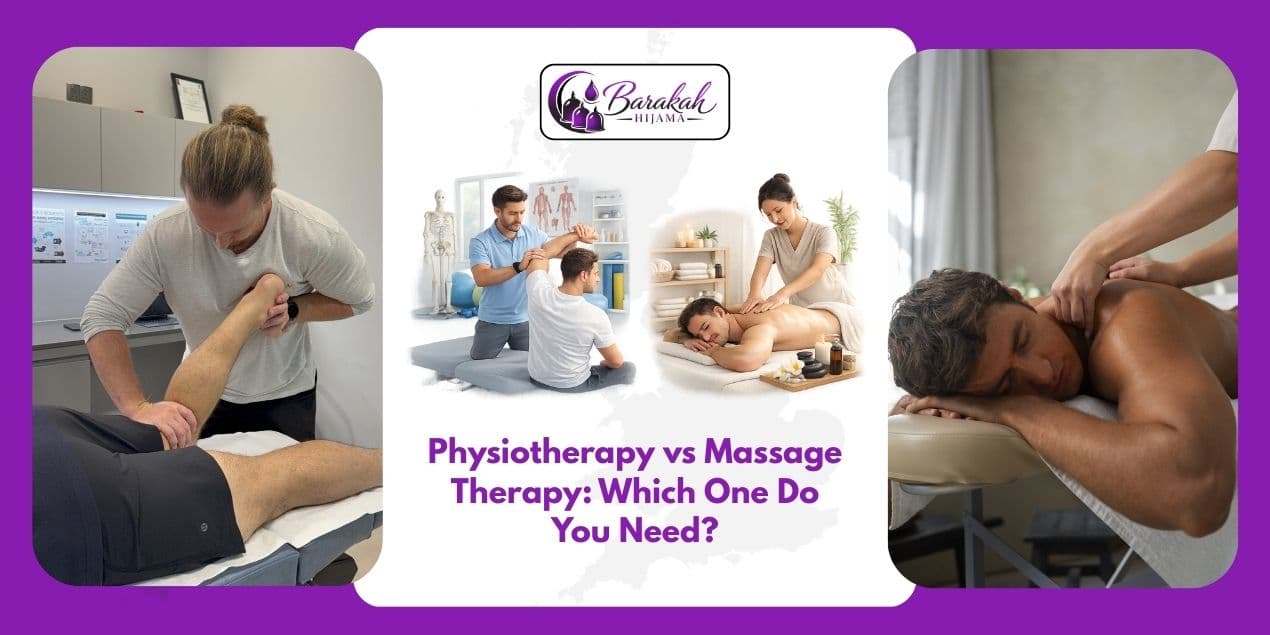
People who look for natural methods to treat their pain and their injuries will find two treatment options which they can use to address their needs: physiotherapy and massage therapy. In the UK, people use both therapies to achieve better mobility and to decrease muscle tension and to improve their overall health. The process of making a treatment choice becomes easier when you learn about the distinct characteristics of these two medical options.
At Barakah Hijama, clients visit our facility because they need assistance in deciding between physiotherapy and therapeutic massage. The two therapies help patients recover from their injuries while they build better health but each therapy functions through its own distinct methods.
The guide will describe the main distinctions that exist between physiotherapy and massage therapy while explaining the operational mechanisms of both treatments and their respective application contexts. The article will enable you to determine which therapy option best suits your needs.
What Is Physiotherapy?
Physiotherapy, which people call physical therapy, serves as a medical treatment that helps patients recover their ability to move and restore their strength and physical abilities. The treatment method receives common endorsement for individuals who need to recover from their injuries or surgical procedures or their chronic health conditions.
Physiotherapists use different treatment methods to assist their patients in recovering from injuries, which include:
- Targeted exercises
- Joint mobilisation
- Muscle-strengthening programs
- Posture correction
- Rehabilitation therapy
Many people searching online for physiotherapy near me in the UK are usually dealing with conditions such as chronic back pain, sports injuries, or mobility limitations.
Physiotherapy focuses on addressing the root cause of physical problems rather than just providing temporary relief.
What Is Massage Therapy?
The field of massage therapy uses physical techniques to create treatments which help people achieve muscle relaxation, tension reduction, and better blood circulation. The process involves using pressure and movement techniques to treat muscles and soft tissues, which helps people achieve relaxation and recovery.
The field of massage therapy includes multiple techniques, which include
- Swedish massage for relaxation
- Deep tissue massage for chronic muscle tension
- Sports massage for active individuals
- Therapeutic massage for general wellness
People who experience stress or muscle stiffness, or fatigue typically look for nearby massage therapy services. The main goal of massage therapy is to help people relax their muscles and improve blood circulation.
Key Differences Between Physiotherapy and Massage Therapy
The two treatments share a goal of bettering physical health but they pursue their objective through different methods and distinct treatment methods.
Treatment Goals
The treatment objectives establish the goals that medical professionals and healthcare providers use to treat patients through physiotherapy.
Physiotherapy is a medical treatment used by doctors and other healthcare providers to treat patients with injuries or medical conditions.
Treatment Techniques
Massage therapy provides relaxation through its ability to help muscles release tension, which makes it suitable for stress relief and treatment of minor muscle pain.
Physiotherapy requires patients to follow a set treatment procedure, which consists of assigned exercises and movement practice, and rehabilitation activities.
Massage therapy employs manual techniques to apply pressure on muscles, which leads to better blood flow and muscle relaxation.
Medical vs Wellness Approach
Physiotherapy constitutes a clinical treatment that healthcare professionals use to treat patients with particular medical conditions, which include:
- Sports injuries
- Joint problems
- Post-surgery recovery
- Chronic pain conditions
Massage therapy functions as a wellness treatment that enhances relaxation and decreases stress while assisting muscles in their recovery process.
When Should You Choose Physiotherapy?
Physiotherapy acts as the most effective treatment solution for people with physical disabilities who need help with their everyday activities.
You should consider physiotherapy as a treatment option if you experience:
- Persistent back or neck pain
- Sports injuries
- Limited mobility
- Joint stiffness
- Post-surgery recovery needs
- Poor posture
A qualified physiotherapist will evaluate your condition and develop a specific treatment plan that will help you regain your strength and movement abilities.
The majority of people who search for physiotherapy services in the UK do so because they need treatment for chronic pain or they want to recover from their injuries.
When Is Massage Therapy the Better Choice?
People who want to achieve relaxation and stress reduction and improve their muscle comfort should choose massage therapy.
People who experience the following conditions should consider massage therapy as a potential treatment.
- Muscle tension from daily activities
- Stress or mental fatigue
- Tight shoulders or neck
- General body stiffness
- Mild muscular discomfort
Massage therapy benefits blood circulation while it helps the nervous system to relax and creates a state of overall wellness.
People in the UK who seek professional massage therapy services select this treatment as their preferred self-care method.
Can Physiotherapy and Massage Therapy Work Together?
Physiotherapy and massage therapy can work together to support treatment in several situations.
The treatment of sports injuries requires physiotherapy to help patients regain strength and mobility, while massage therapy serves to alleviate muscle tension and decrease pain throughout the healing process.
Therapeutic combinations show better results because they treat both physical disorders and muscle tightness problems.
The Role of Cupping Therapy and Hijama in Pain Management
People are exploring cupping therapy and hijama as additional treatments, which they use together with physiotherapy and massage therapy.
Hijama cupping therapy applies suction cups to the body, which creates a vacuum effect that enhances blood flow and assists the body in its natural healing process. People use wet cupping therapy to treat muscle stiffness because it helps them achieve better blood flow and assists their body in removing toxins.
At Barakah Hijama, some clients choose to combine cupping therapy with massage or physiotherapy to enhance relaxation and recovery.
The different methods of these therapies produce distinct results, yet they all work to enhance physical health and overall well-being.
Choosing the Right Therapy for Your Needs
When deciding between physiotherapy and massage therapy, consider the type of problem you are experiencing.
Physiotherapy serves as the optimal solution for medical rehabilitation purposes, injury recovery needs, and mobility enhancement requirements.
If you want to achieve relaxation and relieve stress while easing muscle tension, you should select massage therapy as your treatment option.
The most effective treatment option will often emerge from situations that require both treatments to be combined.
The first essential step requires you to meet with a qualified practitioner who will evaluate your condition to create an appropriate treatment strategy.
The Importance of Professional Treatment
All therapy options require trained specialists who implement safe handling procedures and proper hygiene methods for their treatment work.
A professional clinic will:
- Conduct a consultation before treatment
- Understand your health history and symptoms
- Recommend suitable therapies
- Provide safe and hygienic treatment environments
These factors ensure that you receive the most effective and comfortable experience possible.
Final Thoughts
Physiotherapy and massage therapy both offer essential benefits which help people achieve better health outcomes during their recovery process. Physiotherapy focuses on rehabilitation, mobility, and treating medical conditions, while massage therapy helps relax muscles, improve circulation, and reduce stress.
The different effects of these treatments enable you to choose which therapy most effectively matches your requirements.
The best way to handle your situation involves seeking professional help when you experience pain or muscle tension, or any type of physical discomfort. The correct treatment method allows your body to heal itself while you achieve improved health results.
Frequently asked questions
Both treatments have their own advantages, but neither treatment is superior to the other. Patients require physiotherapy for their rehabilitation needs because it provides better treatment than massage therapy which only offers relaxation and muscle tension relief.
Massage therapy can relieve muscle tension but usually does not replace physiotherapy when dealing with injuries or medical conditions.
The frequency depends on individual needs. Some people benefit from monthly sessions while others need to schedule more treatments between stress periods and muscle strain times.
Yes. Physiotherapy helps people with chronic pain through muscle strengthening exercises and posture enhancement and movement pattern restoration.