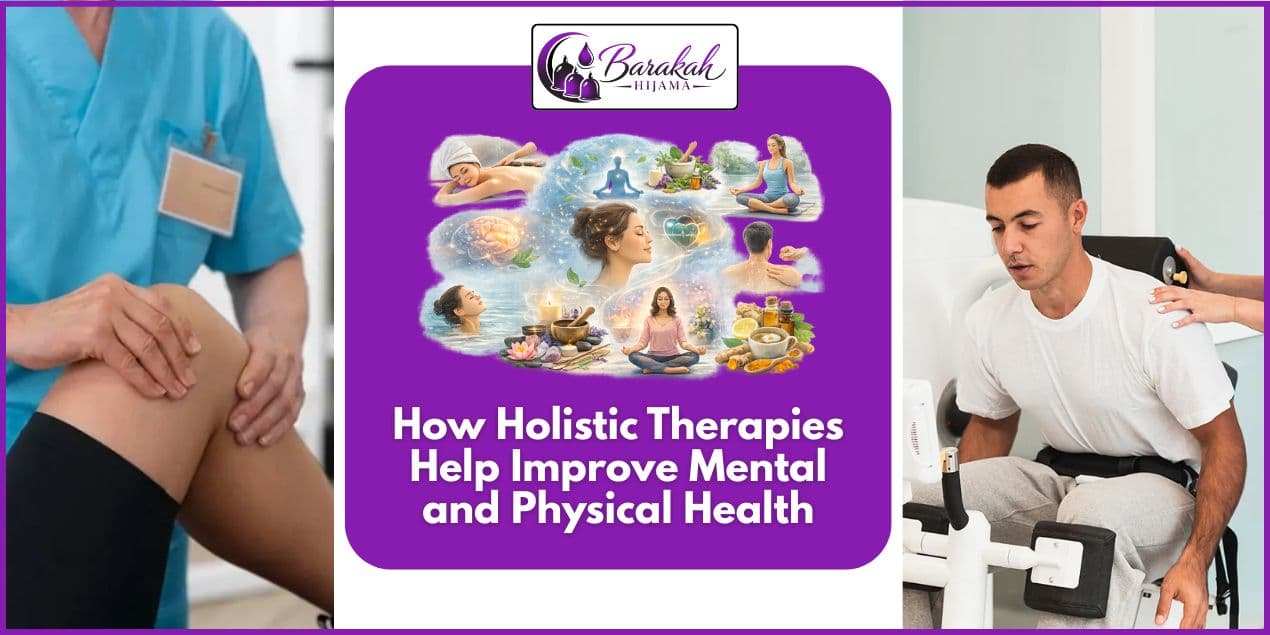
Modern life keeps throwing constant demands at both the body and mind, and somehow, it just stacks up. Long work hours, stress, not enough sleep, physical stillness, plus unhealthy habits can, little by little, start to shift your overall state. That’s why many people are looking toward holistic therapies, trying to nudge their health more naturally. And, unlike methods that zero in on only one symptom, holistic care tries to hold the whole person together, mind, body, and emotional well-being, all in the same picture.
With Hijama therapy, massage therapy, and physiotherapy, plus other natural wellness practices that people actually use day to day, holistic treatments are getting more common. A lot of folks choose them because they want approaches that feel safer and also effective for everyday living. If you’re coping with long-term pain, fatigue, heavy stress, anxiety, or even limited movement, these holistic therapies can assist in restoring balance. In time, they may help support long-term wellness, too, not just a quick fix.
What Do You Know About the Holistic Approach to Health
Holistic health is kinda built on the idea that your physical well-being, emotional state, and mental health are all tangled together in a real way. So when one part starts slipping, the other parts usually get dragged along too, even if they don’t look related at first.
Like, chronic stress can end up causing muscle tightness, headaches, not-so-great sleep, and that constant tired feeling. And on the other hand, if someone lives with ongoing physical pain, it can mess with mood, reduce confidence, and weaken general mental well-being
That’s basically the point where holistic therapies feel different. Rather than only chasing the symptoms, they try to support the body’s own healing ability, while also strengthening overall health more broadly.
Lots of people who are looking for something natural treatment for pain relief, calmer nights, better mobility, or stronger stress management are now turning to options such as Hijama, massage therapy, and physiotherapy.
How Hijama Therapy Supports Whole-Body Wellness
One of the most recognized holistic treatments is Hijama therapy, also called wet cupping therapy. It has been practised for centuries and is highly valued within the Islamic tradition. Hijama is usually used to support circulation, promote calm relaxation, and enhance overall well-being in a more general sense.
A lot of people look for Hijama therapy to assist with things like
- Muscle tension
- Chronic pain
- Stress and anxiety
- Fatigue
- Sports recovery
- General wellness
As we mentioned in our guide about What Is Wet Cupping Therapy and How Does It Benefit the Body?, the way it works is pretty straightforward: suction is created on particular parts of the body, so circulation gets a nudge and the body can lean into its own natural healing process.
When people search for the health benefits of Hijama therapy, they often say they feel lighter, more relaxed, and even a bit more energized after the session, which many consider a helpful result overall.
Can Holistic Therapies Help Manage Chronic Pain?
Chronic pain is something that affects millions of people, and it can quietly wreck the normal rhythm of daily life. A lot of individuals end up using medication as a tool for symptom control, but holistic therapies can act like extra support, not just something that replaces medication completely, or well, not always.
In our article, Can Hijama Cupping Help with Chronic Pain and Fatigue? We describe how hijama cupping therapy might assist people dealing with ongoing discomfort. It’s not magic, but it can be a helpful nudge.
Then physiotherapy comes in, and it’s usually more about restoring motion and fine-tuning movement habits, plus building stronger muscles. It tries to get at the root cause of pain instead of only covering symptoms, even if the latter is what many people want at first.
Massage therapy can also be useful for easing stubborn muscle tightness and supporting circulation or blood flow, however you prefer to say it. For many, it makes discomfort feel more manageable, day to day.
And when different options are paired together, many people report better long-term outcomes compared with relying on just one single approach on its own.
The Connection Between Mental Health and Physical Health
Mental and bodily health are pretty connected. When stress stays high for a long while, the body usually starts showing physical clues such as:
- Headaches
- Fatigue
- Sleep disturbances
- Digestive issues
- Muscle tension
Holistic therapies tend to help with the mental strain and the physical aftermath, at the same time, kind of like a two-way street.
In our blog, How Does Massage Therapy Help with Anxiety and Better Sleep? We went over how therapeutic massage supports relaxation and helps steady the nervous system.
Also, our article How Does Psychotherapy Help with Anxiety and Stress? underscores how important it is to tend to emotional well-being, alongside the physical symptoms.
When these approaches are paired, people often notice changes that feel better in mood and day-to-day wellness, overall.
The Growing Role of Massage Therapy in Wellness
Massage therapy has, honestly, become one of the most popular holistic health options worldwide, at least in the last few years.
A lot of folks, when they search for massage therapy in the UK or even the “best massage clinic near me” type thing, usually want answers for stress, that heavy muscle soreness, and problems with sleeping properly.
When you book regular massage therapy, it may assist with a few common areas, like
Help with relaxation
During a session, the body starts to shift into a calmer mode, and that often eases physical tightness plus mental noise
Support more restful sleep
Many clients say their sleep quality improves after treatment, especially when stress is causing that restless, insomnia-type pattern
Boost circulation
Better blood flow means oxygen and nutrients can travel through the body more efficiently, so everything feels a bit more alive
Reduce Muscle tightness
For office workers, athletes, or anyone with physically demanding work, massage can take the edge off muscle tension and day-to-day discomfort
Over time, these kinds of effects add up, and people often notice both physical relief and emotional steadiness, kind of together, not separate.
Why Physiotherapy Is an Important Part of Holistic Care
Physiotherapy is mostly about getting movement back online, making strength better, and supporting someone to recover after an injury or certain physical limits; it is kind of the whole goal.
As it was discussed in “Can Physiotherapy Help You Recover Without Surgery?”, a lot of conditions can be handled in a good way with the right kind of rehabilitation program, even when you want to avoid cutting or surgery.
People often look up things like :
- Physiotherapy near me
- Physiotherapy in Sheffield, UK
- Physiotherapy for back pain
- Physiotherapy for sports injuries
A licensed physiotherapist then maps out an individual treatment plan, which aims to improve function and reduce pain in a natural manner without forcing it.
And when you add complementary methods like massage and Hijama, physiotherapy can become a strong part of a more holistic recovery approach.
Can Holistic Therapies Strengthen the Immune System?
The immune system gets impacted by a bunch of lifestyle things, like stress levels, sleep quality, nutrition, and also general physical well-being.
In our earlier piece How Does Hijama Support the Immune System Naturally? We looked at how encouraging circulation and easing mental tension might support broader wellness.
Even so, no therapy can really promise immunity against every kind of sickness, but holistic approaches could still help people keep up more health-forward habits and stronger bodily resilience, day by day.
That is, probably one of the reasons so many people are turning toward natural wellness therapies rather than waiting until health issues start getting severe.
Exploring Traditional and Modern Healing Together
One of the distinct pieces of holistic healthcare is how it blends olden wisdom with modern treatment techniques, kind of all at once, though.
Like in our article What Are the Benefits of Using Horn Cups in Hijama Therapy? It discusses traditional Hijama approaches that are still appreciated, even now, by many people.
In the same way, physiotherapy stands as a more current evidence-based method for rebuilding bodily function and mobility.
So when traditional therapies and contemporary healthcare practices get paired together, people often end up with a broader, more rounded way toward wellness, not just one narrow path anymore.
Holistic Therapies in Sheffield UK
Interest in holistic healthcare keeps growing across the UK, like it’s sort of accelerating over time.
A lot of folks who are searching for :
- Hijama therapy in the UK, Sheffield
- Hijama in the UK, Sheffield
- Cupping therapy in Sheffield, UK
- Physiotherapy Sheffield
- Massage therapy Sheffield
often want services that are safe and professional, services that really help with both body comfort and mind balance, you know, the whole wellbeing picture.
In Sheffield, more residents are starting to see how prevention-oriented healthcare and natural wellness approaches can matter, not just quick relief for a short while, but more about supporting long-term health and steadier recovery.
Why Choose Barakah Hijama for Holistic Wellness?
At Barakah Hijama, we feel like health isn’t really something you just grab in a day; it’s more of a full journey, not a quick fix. The whole thing, physical, emotional, and spiritual, kind of goes together, even if people forget that part.
Our experienced practitioners focus on offering treatments that help your whole well-being, carefully and steadily. There’s a reason patients often choose Barakah Hijama because we keep things clear and well-managed, not rushed or casual.
People choose us for a few key things, such as
- Certified and trained practitioners
- Strict hygiene and safety standards
- A professional treatment environment
- Personalised care plans, based on your needs
- Sunnah-based healing principles
- A real commitment to holistic wellness
So whether you are exploring Hijama therapy, getting massage therapy, or you want guidance on improving your overall health, we aim to help you feel your best, naturally.
Conclusion
Holistic therapies give a kind of whole, round approach to bettering mental and physical health at the same time. Instead of only zeroing in on symptoms, treatments like Hijama therapy, massage therapy and physiotherapy kind of lean into the body's natural repair, helping it along while also supporting long-term wellness.
It can be from managing chronic pain, lowering stress levels, and also helping sleep quality, to supporting mobility and everyday movement. In general, holistic therapies can matter a lot for a more grounded, healthier lifestyle. When traditional healing methods are paired with modern therapeutic approaches, people often see real, meaningful changes in their overall well-being, not just short-term relief.
If you are searching for professional holistic care, Barakah Hijama offers trusted treatments that are designed to help you reach better balance, improved health, and a richer quality of life, naturally.
Frequently asked questions
Holistic therapies improve mental and physical health by looking at the mind-body link, not just the symptoms. In general, practices like Hijama, massage therapy, and physiotherapy aim to reduce stress, help the flow of blood, ease discomfort, and keep overall wellness steady, even if it feels a little slow at first.
When people ask about the most effective holistic therapies for stress and anxiety, a few usual choices often come up. Massage therapy, Hijama therapy, mindfulness exercises, and psychotherapy are commonly used. They tend to support calmness, relaxation, and a more stable emotional balance, which is kind of the point, in a practical way.
Yes. Hijama therapy may help with blood circulation, create a sense of relaxation, support pain management, and strengthen general well-being. Many individuals include it in a holistic health and self-care routine, sort of like a regular reset.
It can be, because physiotherapy is frequently used as part of a whole plan. It focuses on improving movement, reducing pain, and enhancing physical function while still supporting long-term health goals.
In many cases, therapies like Hijama, massage therapy, and physiotherapy can work as partners instead of conflicting. Still, it’s best to speak with qualified practitioners, because a personalised plan is usually the safest route.