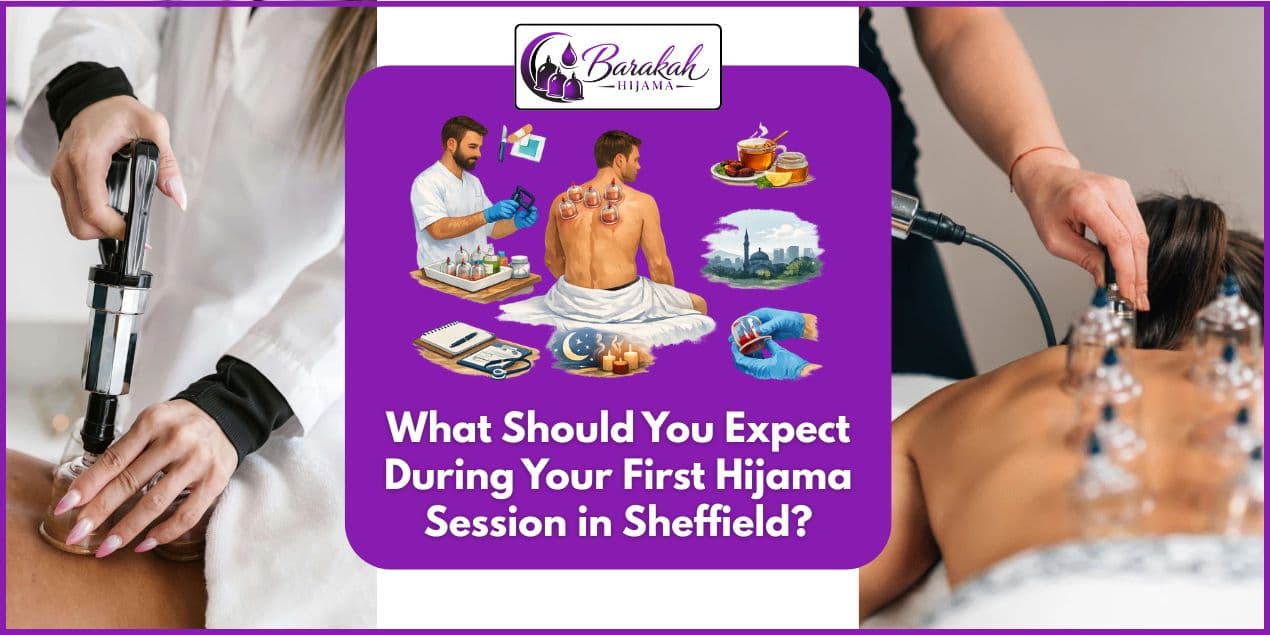
Trying out a new natural therapy for the first time, it can bring a lot of questions, like how Hijama works, whether it's painful, what happens when you’re actually there, and how your body might feel after. When you understand the whole process, you tend to feel more relaxed and ready, even before the first visit.
Hijama therapy is a traditional form of cupping therapy that’s been used for many centuries. It’s often seen as a natural approach to supporting wellbeing, gentle unwinding, and pain management. In Sheffield, UK, many people are starting to explore Hijama as part of their wellness routine, mostly because they want natural treatment options alongside a healthy lifestyle.
So if you’re looking for “first Hijama session near me” or “Hijama therapy in Sheffield, UK”, or you’re just trying to figure out what happens during Hijama cupping therapy, this guide explains what you need to know before you book your appointment at Barakah Hijama.
What Is Hijama Therapy and Why Are People Choosing It?
Hijama is an old kind of cupping method where cups that are made for it get placed on certain parts of the body to make a gentle suction. With wet cupping therapy, they may first create small, controlled scratches on the skin, and only then place the cups again, so that a little bit of blood can be released, sort of carefully.
A lot of people go for Hijama because they like wellness approaches that work with the body’s own recovery processes rather than against them. People often link the practice with things like deeper relaxation, better blood circulation, muscle comfort, and a general sense of well-being. Some describe it as calming in a very straightforward way, not too complicated.
In Sheffield, interest in Hijama keeps growing because individuals are searching for holistic options that aim to bring physical and emotional balance more into line. Whether it’s athletes dealing with lingering muscle tension or everyday folks just trying to get some relief from minor aches, Hijama has turned into a well-known natural therapy across the UK.
Why Do People Search for Hijama Therapy in Sheffield?
Modern lifestyles kind of throw in challenges like stress, long working hours, bad posture, physical strain, and a lack of real rest. All these little things can end up causing muscle tightness, fatigue, and just that general feeling of discomfort.
So now many people around Sheffield are actively searching for:
- Hijama therapy near me
- Best hijama clinic in Sheffield
- Cupping therapy in Sheffield, UK
- Natural pain relief treatments
- Holistic therapies for wellbeing
And yeah, instead of those temporary fixes that only deal with symptoms, people are leaning toward holistic treatments that actually look at lifestyle, relaxation, and overall body balance as a whole.
At Barakah Hijama, each session is set up around what you individually need, while still keeping professional hygiene standards and a calm, comfortable environment.
What Happens Before Your First Hijama Session?
Initial Consultation and Health Discussion
Your first Hijama appointment usually starts with a consultation, kinda like a slow warm-up. A trained practitioner will talk with you about your health history, daily routine, what worries you, and why you’re looking into Hijama.
This part matters because every person is not the same. The practitioner may ask about where you feel discomfort, any prior medical conditions, the medications you take, and your overall well-being.
A proper consultation helps build a suitable treatment plan and makes sure the session feels calm and right for you, not just “generic.”
Choosing the Right Hijama Technique
Depending on your goals, the practitioner will sorta explain which type of treatment may be suitable. Some people pick dry cupping for relaxation and muscle support, but others lean toward wet cupping as part of traditional Sunnah-based healing.
Getting familiar with the process before starting really helps lower that uncertainty, and it can make it easier for you to feel relaxed during your appointment.
Does Hijama Hurt During the First Session?
One of the most common questions people ask is “Is Hijama painful?”
For most people, Hijama isn’t seen as painful. During the cupping session, you might notice a light tugging feeling or some pressure on the skin as the cups make suction. A lot of folks say it feels strange, more unusual than genuinely uncomfortable, you know.
If wet cupping is done, the small skin incisions are kept under tight control and done with sterile equipment. Many clients feel it ends up relaxing, and honestly, easier than they expected.
A good and experienced practitioner keeps the whole treatment safe, comfortable, and adjusted for your own personal needs.
Step-by-Step Process of Your First Hijama Appointment
Step 1: Getting the Treatment Area Ready
Before you start, the practitioner cleans and preps the chosen areas. Hygiene is, honestly, one of the most important parts of professional Hijama therapy. At Barakah Hijama, safety procedures are followed carefully, including the use of clean equipment and suitable preparation methods, not just random steps.
Step 2: Placing the Cups
The cups are gently placed on specific spots of the body so you get a controlled suction. This whole process may help with blood circulation, and it can also promote relaxation in targeted areas. A lot of people notice a calm, easing feeling right during this stage.
Step 3: Wet Cupping, if it’s suitable
For wet cupping, tiny superficial marks may be made first, before the cups are applied again. This traditional way is commonly practised as part of Sunnah healing. The procedure is carried out carefully by trained professionals, using hygienic techniques and steady hands.
Step 4: Aftercare Notes
After your session ends, your practitioner will share advice on how to care for your skin and support your recovery. You might be told to:
- Drink enough water
- Avoid intense exercise straight away after treatment
- Keep the treated areas clean
- Give your body some time to fully relax
What Are the Benefits of Your First Hijama Session?
The benefits of Hijama therapy can end up feeling different from person to person. A lot of clients say they feel more relaxed, sort of, and also refreshed right after the session, even if it’s not the same for everyone.
Some of the more commonly talked about benefits of Hijama include things like
Supporting muscle relaxation and comfort
Many people look into Hijama when they have muscle tension, stiffness, or just everyday physical discomfort. The suction effect may help ease tight spots and also improve circulation around the areas that were treated.
If someone is searching “how Hijama works for pain relief”, cupping therapy is often mentioned as part of a larger plan for managing discomfort in a natural way.
Promoting better blood circulation
Good circulation really matters because it helps deliver oxygen and nutrients all over the body. Hijama is traditionally believed to help blood flow in the targeted areas.
Supporting stress relief and relaxation
Stress can affect both your mind and your body. Quite a few people find Hijama calming, because the session itself kind of encourages relaxation, and it gives you quiet time that feels like self-care
You might also like to check our earlier guide on how Holistic therapies help improve mental and physical health, for more ideas on natural approaches for wellbeing.
Supporting a Natural, Wellness Routine
A lot of clients also merge Hijama with other grounded habits like physical movement, steady eating that is balanced, bodywork massage therapy, and then finally proper rest. Sometimes it feels like all of it pairs together in a kind of quiet, gradual flow, not just one thing at a time.
How Should You Prepare for Your First Hijama Session?
Getting ready properly can give you a much better experience, honestly.
Right before your appointment:
- If they say you should, eat a light meal
- Stay hydrated
- Wear comfortable clothing that feels easy
- Let your practitioner know about any health concerns
- Try not to arrive exhausted or kind of dehydrated
Your practitioner will then offer personalised guidance, based on your situation, and what fits best for you.
What Should You Expect After Hijama Treatment?
After your first session, you might notice a bit of temporary residue where the cups were put down. It’s pretty common, and it usually fades on its own as time goes on.
Some people feel deeply at ease after treatment, while others may notice a light sense of tiredness, as their body starts adjusting.
If you follow the aftercare suggestions after the appointment, you can tend to get the best overall results from the session.
Finding Professional Hijama Therapy in Sheffield, UK
So you’re looking for Hijama therapy in Sheffield, UK, and honestly, picking a trusted and experienced clinic really matters more than people think.
Ideally, a good Hijama practitioner should have,
- Certified and seasoned practitioner with experience
- A safe, clean, kind of hygienic treatment environment
- Sterile equipment and careful procedures
- Personalised consultations that actually listen to you
- And also respect for traditional Sunnah-based treatment approaches
Barakah Hijama offers professional Hijama in the UK, Sheffield, with a focus on safety, comfort, and overall client wellbeing. Every session is carried out with attention to hygiene and those traditional principles, so clients can feel calm and confident during the whole journey.
Whether you’re considering cupping therapy in Sheffield, UK, for relaxation, wellbeing support, or for natural pain management, choosing a clinic with real experience can make that first visit feel easier and not so awkward.
Why Choose Barakah Hijama for Your First Session?
Your first therapy experience should feel safe, professional, and honestly welcoming. At Barakah Hijama, we try to build that kind of calm space where clients can understand what’s going on, before treatment actually begins, not rush into it.
Our way of working blends traditional knowledge with up-to-date hygiene practices. Our certified hijama practitioners keep everything aligned with professional standards, while also honoring the principles of Sunnah healing.
From the initial consultation to aftercare, every little stage is arranged so your Hijama journey feels comfortable and genuinely helpful.
Conclusion
Your first Hijama session doesn’t have to feel 100% uncertain. When you get a clear sense of how it works, what you can expect from the benefits, plus the preparation and aftercare, you can walk into your appointment with more calm and confidence.
Hijama therapy is a traditional natural treatment that a lot of people use as part of their wider wellness routine. With proper professional guidance, good hygiene, and personalised attention, it can turn into a really useful piece of a healthy lifestyle, even if you’re new to it.
If you are searching for trusted Hijama therapy near me in Sheffield, Barakah Hijama provides safe, professional, and personalised sessions that support your wellbeing journey.
Why not book your first appointment today and feel the benefits of traditional Hijama therapy in a comfortable and professional environment?
Frequently asked questions
After your first cupping session, you might feel calm, a bit drained, or even slightly light-headed. Small circular marks are normal, and they usually thin out within a couple of days.
Before hijama, try not to eat heavy meals, avoid caffeine, don’t smoke, and skip intense exercise. Keep yourself well hydrated, and get good rest, because that helps your body prepare itself for a smoother session, and frankly, a more effective one too.
Cupping is often described as helping shift stagnant blood and metabolic waste in the surface tissues. It is considered to support detoxification, though the scientific wording differs, and research is still in progress, so there isn’t one final explanation.
A common mild downside is temporary bruising, a little tenderness, or general fatigue. These typically clear up fast, especially when hijama is performed properly by a trained practitioner who follows clean and hygienic standards.
There is no clear direct sign that you can see, or a specific way to confirm toxins are leaving. Still, many people say they feel “lighter,” more at ease, they sleep better, and have more energy after hijama sessions.