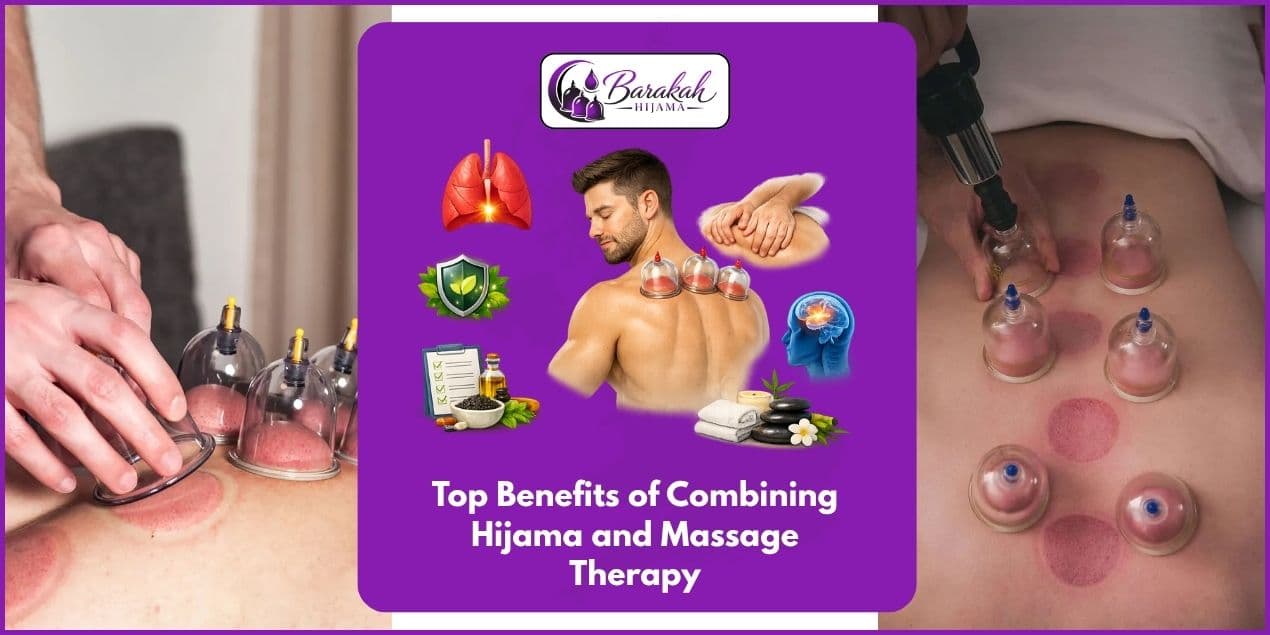
When people think about improving their health naturally, they usually zero in on one “thing” to try. Still, some of the more useful wellness options actually show up when you blend a couple of complementary treatments that kinda work in tandem and help the body out. One combo that keeps gaining momentum is Hijama therapy and Massage therapy, together
A lot of people who go looking for massage therapy benefits or for Hijama therapy benefits end up surprised, because these practices can impressively support each other. Massage therapy tends to lean toward easing muscular strain, helping with flexibility, and lowering physical tension. Hijama therapy, on the other hand, leans more toward awakening circulation and encouraging the body’s own recovery pathways
When they’re done as a group, you get a more rounded method that tackles both the stuff you can feel day to day and the bigger idea of overall wellness. If you’re dealing with muscle tightness, stress fatigue, or you just want a gentler route to better health naturally, learning how Massage therapy and Hijama therapy can fit together might make it easier to choose where to go next in your wellness journey.
How Massage Therapy and Hijama Therapy Work Together
Both treatments have been used for centuries, in different cultures, sort of. Their approaches are not the same, but the aims are surprisingly close: helping the body work more smoothly and also nudging natural recovery along.
With massage therapy, the idea is basically manipulating muscles and soft tissues, so tension eases, mobility gets better, and the whole system slips into relaxation. Hijama therapy, often called cupping therapy, relies on suction to encourage blood flow and to aid recovery in a more direct way.
When you combine them, you end up with a fairly strong pairing. Massage helps by loosening the tight spots first, and then Hijama therapy can add extra support for circulation and recuperation, mainly in the focused areas.
That extra-cautious kind of balance is one reason some people end up looking for massage therapy near me and Hijama therapy in the UK when they want natural wellness options.
Why More People Are Combining These Therapies
Modern lifestyles really do put a lot of strain on the body. Spending long hours at a desk, having poor posture, moving too little, and that everyday stress stuff can all stack up, leading to aches and fatigue that just don’t seem to go away.
One treatment on its own might give short-term relief, but honestly, combining therapies is often the better way to get something more full-spectrum for overall wellness. A lot of clients say they feel not only physically better, but also mentally recharged after getting both treatments.
And because holistic healthcare is getting more attention, more people are starting to look into massage and Hijama therapy, as part of a steady wellness routine rather than something random.
Enhanced Muscle Relaxation and Pain Relief
One of the most noticeable perks from mixing Massage therapy with Hijama therapy is better muscle relaxation, and honestly, it just feels… smoother. Massage therapy helps loosen tight muscles and release the strain that kinda builds up over time. After the muscles are finally calmed down, Hijama therapy can then focus on particular spots, like where circulation may really need an extra push.
Many people who are dealing with things like
- Neck tension
- Shoulder stiffness
- Back discomfort
- Sports-related soreness
- General muscle fatigue
Often discover that putting these two therapies together gives more relief than depending on just one session by itself. The benefits of Hijama therapy become even more noticeable when followed by Hijama, as the body is often more receptive to healing and recovery.
Improved Blood Circulation Throughout the Body
Good blood circulation is very important for good health. The blood distributes oxygen and other nutrients to muscles, tissues, and other organs of the body. Bad circulation can lead to feelings of fatigue, stiffness, and slow recovery from physical exercise.
Massages involve gentle manipulation and pressure that help promote good blood circulation, while the Hijama therapy utilizes vacuum suction to promote blood flow in specific body parts.
These two combined effects could:
- Increase oxygen supply
- Help in the recovery of tissues
- Make one more flexible
- Loosen stiff muscles
- Facilitate self-healing
For many people looking for these benefits, it is Hijama therapy that they opt for due to its possible effect on good blood circulation.
A Natural Way to Manage Stress
Stress is not only harmful to your mind but also shows up physically in the form of muscle tension, headaches, lack of sleep, and tiredness.
Massage is highly regarded for its ability to calm the nervous system. The calming effect of massage may assist in lowering stress hormones in the body and allowing one to relax.
The treatment through Hijama therapy can play an additional role in creating feelings of wellness by releasing the accumulated tensions in the body. One will often feel lighter, calmer, and mentally refreshed when undergoing both therapies. This is probably one of the best advantages of massage and Hijama therapy in modern-day life.
Better Recovery After Physical Activity
If you are an athlete, workout buff, or any individual who is constantly active, then recovery becomes an important element that allows you to perform at your best and avoid injuries.
Massage therapy enables you to relax your muscles and improve your range of motion post-workout. The Hijama therapy could be an additional way to enhance circulation and help your strained parts recover.
Most individuals who exercise regularly make use of both therapies in order to stay flexible and comfortable.
Supporting Better Sleep and Overall Wellness
- Lack of sleep can adversely affect almost all aspects of well-being, such as energy levels, mental state, focus, and immunity.
- The majority of clients receiving a Massage experience better sleep because of decreased stress and tension within the body.
- Clients receiving Hijama treatment also commonly report feelings of relaxation after the procedure.
- Combining these two therapies may provide conditions under which a person can sleep well and regain strength.
- Sleep enhancement is an important and yet underestimated effect of Hijama treatment and Massage therapy.
A Holistic Approach to Long-Term Health
One way in which holistic therapies continue to attract many people is because of the fact that they help promote the health of the whole body.
Rather than focusing on the symptoms only, holistic remedies like massage therapy and hijama therapy enable one to maintain good overall health.
Since they improve circulation, decrease muscular tension, promote relaxation, and aid in recovery, holistic therapies may help one live a healthier lifestyle.
Indeed, regular visits may make an individual more comfortable physically and increase mobility.
Benefits of Combining Massage Therapy and Hijama Therapy for Office Workers
Workers in an office environment usually suffer from various kinds of discomfort due to sitting for extended periods of time and doing repetitive actions.
Some examples are as follows:
Neck and Shoulders Tightness
Many office hours spent in front of the computer or other devices lead to tightening of neck and shoulder muscles. Massage therapy will help to relieve tightness, whereas Hijama therapy might assist in stimulating blood flow to the affected parts.
Lower Back Pain
In most cases, lower back pain results from bad posture. Both treatments may help improve patients' state.
Mental Exhaustion
The stress experienced at work may impact one's physical and psychological condition negatively.
Hijama Therapy in UK, Sheffield: Growing Demand for Integrated Wellness
Natural treatments in healthcare continue to become popular across the United Kingdom.
Individuals seeking Hijama treatment in Sheffield, UK, are opting for treatments that would assist them in achieving their general healthcare objectives. Similarly, when an individual is looking for massage treatments nearby, they discover that there are more advantages to combining treatments rather than utilizing just one treatment.
Individuals interested in Hijama in the UK, Sheffield, and Cupping treatments in Sheffield, UK, are becoming increasingly conscious of holistic health treatments.
More individuals are turning towards natural treatments in order to facilitate their health and wellness.
Why Choose Barakah Hijama?
Barakah Hijama ensures that all services provided are safe, professional, and effective in order to improve the health of their clients.
It employs traditional healing concepts while adhering to modern principles of hygiene and safety. Each service is performed by qualified professionals who realize the need for personalized services.
Some of the features that make clients seek Barakah Hijama include:
- Certified professionals
- High level of hygiene
- Professional service delivery
- Personalized service delivery
- Adherence to the Sunnah treatment concept
Whether one is looking at the benefits of Massage therapy or Hijama therapy, as well as the benefits of both therapies together, they can trust Barakah Hijama.
Conclusion
The advantages of combining both therapies go beyond just being temporarily relaxed. With the help of these therapies, your circulation will improve, muscle stress will lessen, recovery will be easier, good sleep will occur more often, and you will be healthier overall.
In today's world, with more individuals turning to natural healing practices, the combination of these therapies will be ideal for ensuring health and wellness for yourself.
If you've been looking for the best Massage therapy near me or Hijama therapy in the UK, the combination of these two treatments can prove to be beneficial.
Frequently asked questions
Absolutely, these two techniques can be combined. Cupping and massage are complementary methods that can assist in increasing circulation, reducing muscular tension, promoting healing, and relaxing.
There is no winner here since massage and Hijama have different purposes: massage aims to relax muscles, whereas Hijama focuses on improving circulation and recovery. Both techniques work best in combination.
Yes, one can perform a massage after Hijama, provided that it is prescribed by a professional. Such a massage will assist in relaxation after the procedure.
The benefits of this practice include improvement of circulation, relief of muscle pain, relaxation, recovery, and more.
Traditionally, Hijama is thought to support the detox process. Nevertheless, scientific proof of its efficiency needs more investigation and research.